
Global Market Outlook 2026: Navigating the Shift from AI Hype to Real-World Returns
Global Market Outlook 2026: As 2025 draws to a close, the global business landscape stands at a critical crossroads. The “everything rally” of the past year, which saw Japan’s Nikkei 225 soar by 24% and the S&P 500 maintain a resilient 14% growth, is evolving into a more nuanced, results-driven era. Investors and business leaders are no longer satisfied with the mere promise of Artificial Intelligence; they are now demanding clear evidence of monetization and productivity gains. With the Federal Reserve signaling a cautious path for interest rates in 2026 and trade tensions shifting between the world’s two largest economies, the upcoming year promises to be a test of strategic endurance and operational efficiency for global enterprises.

The Federal Reserve’s “Cautious Ease” and Interest Rate Volatility
The defining theme of late 2025 has been the Federal Reserve’s delicate balancing act. After a 25-basis-point cut in December, the central bank adopted a surprisingly hawkish tone for 2026, projecting fewer reductions than many analysts had initially hoped. This “higher for longer” sentiment in the face of sticky services inflation means that capital-intensive sectors must brace for continued borrowing costs. While the U.S. is expected to see a GDP growth acceleration to 2.2% in 2026, the cost of debt remains a primary concern for small and medium enterprises (SMEs) looking to scale.
From Generative AI to “AI Industrialization”
2025 was the year of AI experimentation; 2026 will be the year of AI integration. We are moving beyond simple chatbots. Leading firms in manufacturing and healthcare are now utilizing AI for predictive diagnostics, demand forecasting, and “hyperautomation.” According to recent market reports, nearly 30% of young consumers are already using AI for product discovery, forcing retail giants to pivot toward hyper-personalized customer journeys. The focus has shifted from “what AI can do” to “how AI improves the bottom line,” marking the beginning of an AI-driven productivity super-cycle.

Shifting Trade Corridors: The U.S.-China Dynamic and Emerging Markets
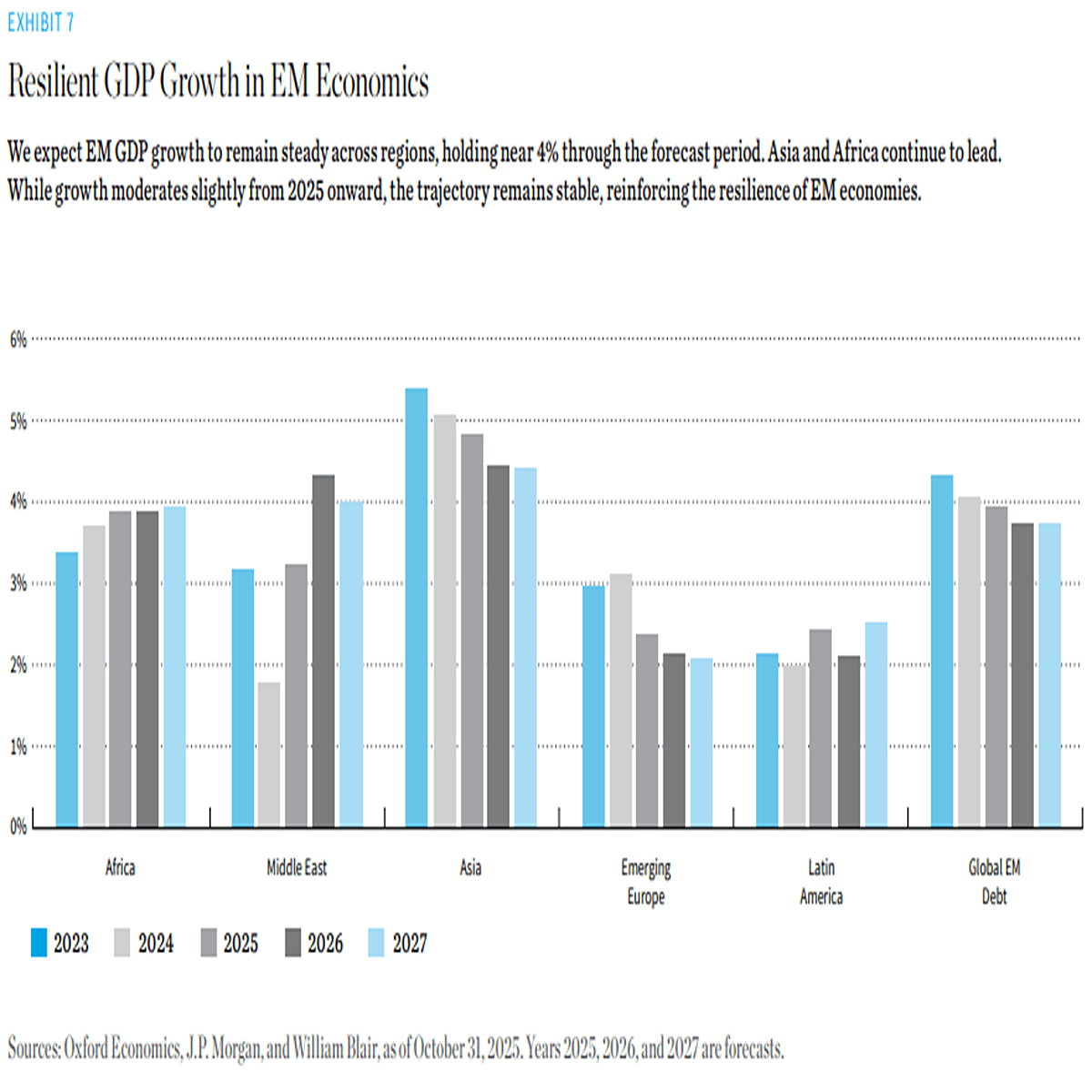
Geopolitical friction continues to reshape global supply chains. As trade tensions between the U.S. and China escalated following tariff adjustments earlier this year, China has aggressively pivoted toward emerging markets to offset lower Western demand. This “de-risking” strategy is creating new power hubs in Southeast Asia and India. For global businesses, the message is clear: diversification is no longer an option but a survival necessity. Companies are increasingly adopting a “China Plus One” strategy, spreading their manufacturing footprint to avoid being caught in the crossfire of trade wars.
The Energy Transition: Stability vs. Security
The energy sector underwent a massive transformation in 2025. While clean energy initiatives saw a brief spike in the U.S. due to subsidy phase-outs, the broader global market has moved toward a more localized and resilient energy model. Interestingly, the surge in AI has created an unexpected boom in the natural gas market, as data centers require immense amounts of 24/7 power. This “energy-for-AI” demand is competing with traditional climate goals, forcing many corporations to rethink their ESG (Environmental, Social, and Governance) roadmaps to balance sustainability with the raw power requirements of modern technology.
The Rise of “Human-Centric” Remote Work Models
Despite early-year efforts by some tech giants to mandate a full return to the office, the hybrid work model has solidified its place in the global economy. In 2026, businesses are viewing remote work not just as a perk, but as a strategic tool to access global talent and reduce real-estate overheads. The focus is now on “digital fluency” and “asynchronous productivity.” Companies that master the art of maintaining culture in a decentralized environment are outperforming their rigid counterparts in talent retention and employee satisfaction.
Investment Strategy: Broadening the Equity Gains
Looking ahead to 2026, financial heavyweights like J.P. Morgan and Goldman Sachs are forecasting that equity gains will need to “broaden out.” The era where a few tech giants (the “Magnificent Seven”) carry the entire market is fading. Investors are looking toward undervalued emerging market stocks and defensive “real assets” like infrastructure and commodities. With global stocks forecast to return approximately 7.7% annually over the next decade, the “smart money” is moving toward a diversified approach that hedges against inflation while capturing the long-term dividends of the digital revolution.
Key Takeaways for 2026
Monetary Policy: Expect a slower pace of rate cuts; liquidity will remain tighter than in the pre-pandemic era.
Tech Evolution: AI must prove its ROI (Return on Investment) through operational efficiency.
Global Trade: Supply chains are becoming more regionalized and less dependent on a single source.
Energy: The intersection of AI power needs and green energy goals will be a major corporate challenge.