
Global Market Outlook 2026: Why Investors Are Betting Big on AI Infrastructure and Easing Interest Rates
Global Market Outlook 2026: As 2025 draws to a close, the global financial landscape is witnessing a dramatic shift that promises to redefine the business world in 2026. After a year marked by “Tariff Tremors” and intense debates over central bank independence, the world market is now entering a phase of “Cautious Optimism.” From the bustling stock exchanges of Tokyo and New York to the emerging tech hubs in India and Southeast Asia, a clear pattern is emerging: the era of high inflation is cooling, making way for a massive investment super-cycle driven by Artificial Intelligence (AI) and Green Energy.

The Federal Reserve and the Global Interest Rate Pivot
One of the most significant drivers of the current market sentiment is the changing stance of the U.S. Federal Reserve. Following a series of rate cuts in late 2025, markets are pricing in a “soft landing” for the global economy. Analysts expect the effective Fed funds rate to settle near 3% by the end of 2026. This shift is not just a domestic American affair; it sets the tone for the Bank of England, the European Central Bank, and emerging market regulators. Lower borrowing costs are expected to unlock billions in “dry powder” currently held by private equity firms, leading to a surge in Mergers and Acquisitions (M&A) in the coming quarters.
AI Infrastructure: The New Global “Real Estate”
If 2024 and early 2025 were about the hype of AI software, 2026 is becoming the year of AI hardware and infrastructure. Hyperscalers like Microsoft, Alphabet, and Meta have significantly increased their capital expenditure guidance for next year. We are seeing a massive “Watt-Bit Collaboration,” where tech giants are partnering with energy providers to build data centers that can handle the immense power demands of Large Language Models. In Japan, companies like Fujitsu and the University of Tokyo are already trialing inter-regional workload shifting to optimize power grids—a move that global markets are watching closely as a blueprint for sustainable tech growth.

Stock Market Resilience: Japan Leads, US Follows
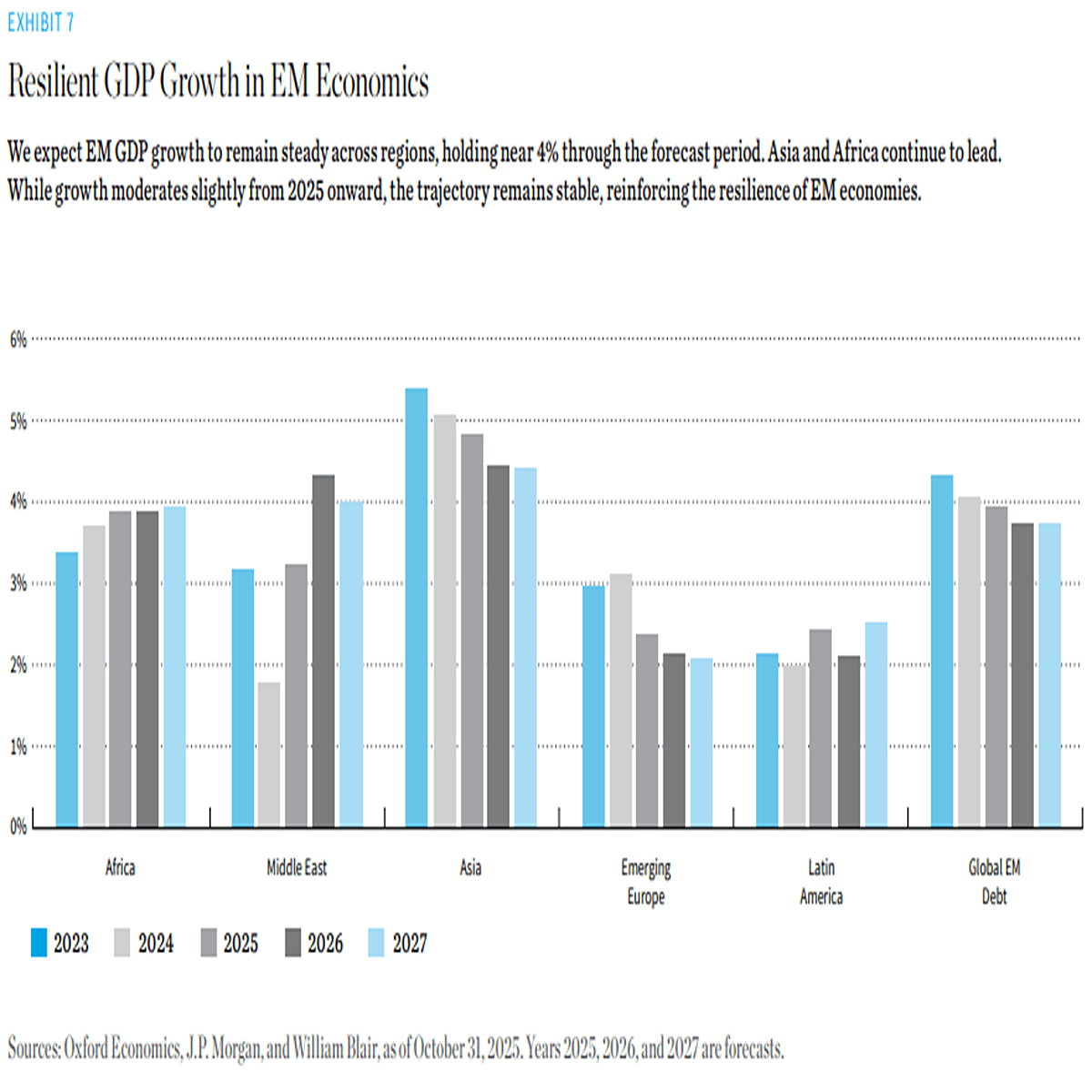
Interestingly, the 2025 performance charts show a surprising leader: Japan. The Nikkei 225 has outperformed many Western indices, boasting returns of over 24% as of late December. This is largely attributed to corporate governance reforms and a stable yen. Meanwhile, the S&P 500 remains resilient, hovering near record highs despite earlier volatility caused by trade tensions. Emerging markets, particularly India and Brazil, are also positioned for a robust 2026, supported by lower local interest rates and healthier fiscal balance sheets. For global investors, the strategy is clearly shifting from “defensive” to “growth-oriented.”
The Energy Paradox: AI Growth vs. Net-Zero Goals
A major challenge facing the world market in 2026 is the “Energy Constraints” paradox. While the demand for electricity is skyrocketing due to AI data centers, the growth of renewable energy—specifically solar—is facing a temporary plateau in major markets like China due to policy shifts from guaranteed pricing to competitive bidding. This has created a unique opportunity for “Green Transformation” (GX) stocks. Companies that can bridge the gap between high-energy tech and carbon-neutral infrastructure are becoming the new darlings of ESG (Environmental, Social, and Governance) investors.
Supply Chain 2.0: Moving Beyond Trade Wars
The “Liberation Day” tariff shocks of April 2025 taught global corporations a hard lesson about over-reliance on single-source manufacturing. As we head into 2026, “Software-Defined Mobility” and localized supply chains are the new buzzwords. Leading automotive groups, such as Hyundai, are aggressively promoting IT and software executives to leadership roles to accelerate the transition to EVs and autonomous systems. The goal is no longer just “cheaper” production, but “smarter” and “closer” production to avoid the havoc of sudden trade policy shifts.
Consumer Sentiment and the “K-Shaped” Recovery
Despite the positive indicators in the stock market, a “K-shaped” recovery remains a concern for global economists. While high-income earners benefit from rising asset prices, the “sticky inflation” in services and housing continues to press the middle class. However, there is a silver lining: productivity gains from AI adoption are finally starting to trickle down into the broader economy. If businesses can successfully use these tools to lower costs for consumers, we could see a significant boost in global consumer spending by the second half of 2026.
Conclusion: Preparing for a Tech-Driven 2026
The global market is no longer just about commodities and traditional manufacturing. It is an interconnected ecosystem of data, energy, and rapid policy shifts. For businesses and investors, the “wait and see” approach of 2025 is over. The coming year will reward those who embrace the AI-driven productivity cycle and adapt to the new “low-rate, high-tech” reality. As the world gears up for 2026, the focus is clear: Innovation is the only hedge against uncertainty.