
US Technology Market 2025: Innovation, Regulation, and the New Digital Economy
US Technology Market 2025: The United States technology market is entering a decisive phase in 2025, where innovation is no longer driven only by speed and scale, but also by responsibility, security, and long-term value creation. From Silicon Valley to emerging tech hubs in Texas and Florida, American companies are reshaping the global digital economy. This shift is being closely watched by investors, policymakers, startups, and consumers alike, making technology one of the most searched and discussed topics in the US market today.
A Strong Start for the US Tech Sector
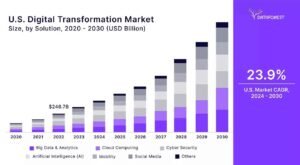
After a volatile few years marked by inflation, supply chain disruptions, and workforce restructuring, the US technology sector has shown renewed stability. Major indices linked to technology stocks have regained momentum, supported by strong earnings reports, cloud expansion, and enterprise digital transformation.
Companies such as Apple, Microsoft, and Google continue to dominate market sentiment. Their focus on subscription-based services, hardware-software integration, and secure digital ecosystems is reinforcing investor confidence across Wall Street.


Semiconductors Become the Backbone of Growth
Why Chips Matter More Than Ever
The semiconductor industry has emerged as a strategic priority for the United States. With rising demand from electric vehicles, data centers, defense systems, and next-generation computing, chips are now central to national economic planning.
The US government’s push for domestic manufacturing has encouraged companies like Intel to expand fabrication plants within the country. This move is reducing reliance on overseas supply chains and creating thousands of high-skilled jobs, particularly in states like Arizona and Ohio.
AI Regulation and Responsible Innovation
Balancing Growth and Accountability
Artificial intelligence remains a major driver of technological progress, but 2025 marks a turning point in how it is governed in the United States. Federal and state-level discussions are focusing on transparency, data privacy, and ethical deployment, especially in sensitive areas such as healthcare, finance, and public services.
Unlike earlier years, the US market is now rewarding companies that demonstrate responsible innovation. Enterprises investing in compliance-ready technology solutions are gaining trust from regulators and consumers, giving them a competitive advantage in the long run.
Cybersecurity Takes Center Stage
Rising Threats, Higher Spending
As digital adoption increases, cybersecurity has become a boardroom-level priority. US businesses are allocating larger budgets to protect customer data, intellectual property, and critical infrastructure.
High-profile breaches in recent years have reshaped consumer expectations, pushing companies to adopt zero-trust architectures and advanced threat detection systems. This trend has fueled rapid growth in the cybersecurity market, benefiting both established firms and emerging startups across the United States.
The Expansion of Cloud and Edge Computing
Faster, Smarter, and More Local
Cloud computing continues to be a growth engine, but edge computing is now gaining equal attention. By processing data closer to the source, US companies are improving speed, reliability, and cost efficiency.
Industries such as retail, manufacturing, and logistics are leveraging hybrid cloud models to support real-time decision-making. This evolution is particularly relevant for American enterprises operating at scale, where milliseconds can directly impact revenue and customer experience.
Tech Startups and Venture Capital Trends
A More Disciplined Investment Environment
Venture capital in the US technology sector has become more selective. Instead of chasing rapid expansion, investors are prioritizing sustainable business models, clear revenue paths, and strong governance.
Startups focused on climate technology, enterprise software, fintech infrastructure, and health technology are attracting significant attention. This disciplined approach is helping the US tech ecosystem mature while reducing the risk of speculative bubbles.
Impact on Jobs and the American Workforce
Reskilling for the Digital Future
Technology is reshaping the US labor market. While automation is changing traditional roles, it is also creating demand for new skills in software development, data management, cybersecurity, and system design.
American companies are investing heavily in workforce reskilling programs, often in partnership with universities and online learning platforms. This focus on talent development is critical to maintaining the US’s global leadership in technology.
What This Means for the US Market Ahead
Looking forward, the US technology market is expected to remain resilient, innovation-driven, and increasingly regulated. Companies that align growth with transparency, security, and social responsibility are likely to outperform competitors.
For consumers, this means more reliable digital services, better data protection, and smarter products. For investors, it signals long-term opportunities in companies that understand both technology and trust.
Conclusion
The US technology landscape in 2025 is defined not just by breakthrough innovation, but by thoughtful execution. As regulation, infrastructure, and consumer expectations evolve, technology companies operating in the United States are setting new global benchmarks. This balanced approach positions the US market as a leader in shaping the future of the digital economy.