
The 2026 Tech Frontier: How Agentic AI and Silicon Photonics are Redefining the US Economy
The 2026 Tech Frontier: As we cross the threshold into late 2025, the American technology landscape is witnessing a tectonic shift that goes far beyond the initial “AI hype” of previous years. The United States market is currently at a critical inflection point where theoretical innovations like Quantum-as-a-Service (QaaS) and Agentic AI are becoming tangible drivers of GDP. From the corridors of Silicon Valley to the high-frequency trading floors of Wall Street, the focus has moved from “What can AI do?” to “How fast can we integrate it into our physical infrastructure?” This transition is setting the stage for 2026, a year that many experts predict will be defined by the “Human-Machine Collaborative Economy.”

The Rise of Agentic AI: Moving from Chatbots to Digital Coworkers
The most significant development in the US market this quarter is the evolution of generative models into Agentic AI. Unlike the standard chatbots we saw in 2023, these new “agents” are capable of autonomous reasoning and multi-step execution. In major US sectors like healthcare and logistics, companies are deploying agents that don’t just draft emails but actually manage supply chains and schedule complex surgeries by interacting with multiple software ecosystems without human intervention.
Google’s recent rollout of Gemini 3 Flash and the high-speed Nano Banana architecture has enabled mobile devices to run complex reasoning tasks locally. This shift toward “on-device intelligence” is a game-changer for privacy-conscious American consumers, reducing the reliance on cloud servers and bringing us closer to a truly personalized digital assistant that knows your schedule, your health metrics, and your professional goals.

The Silicon Revolution: NVIDIA, TSMC, and the Silicon Photonics Breakthrough
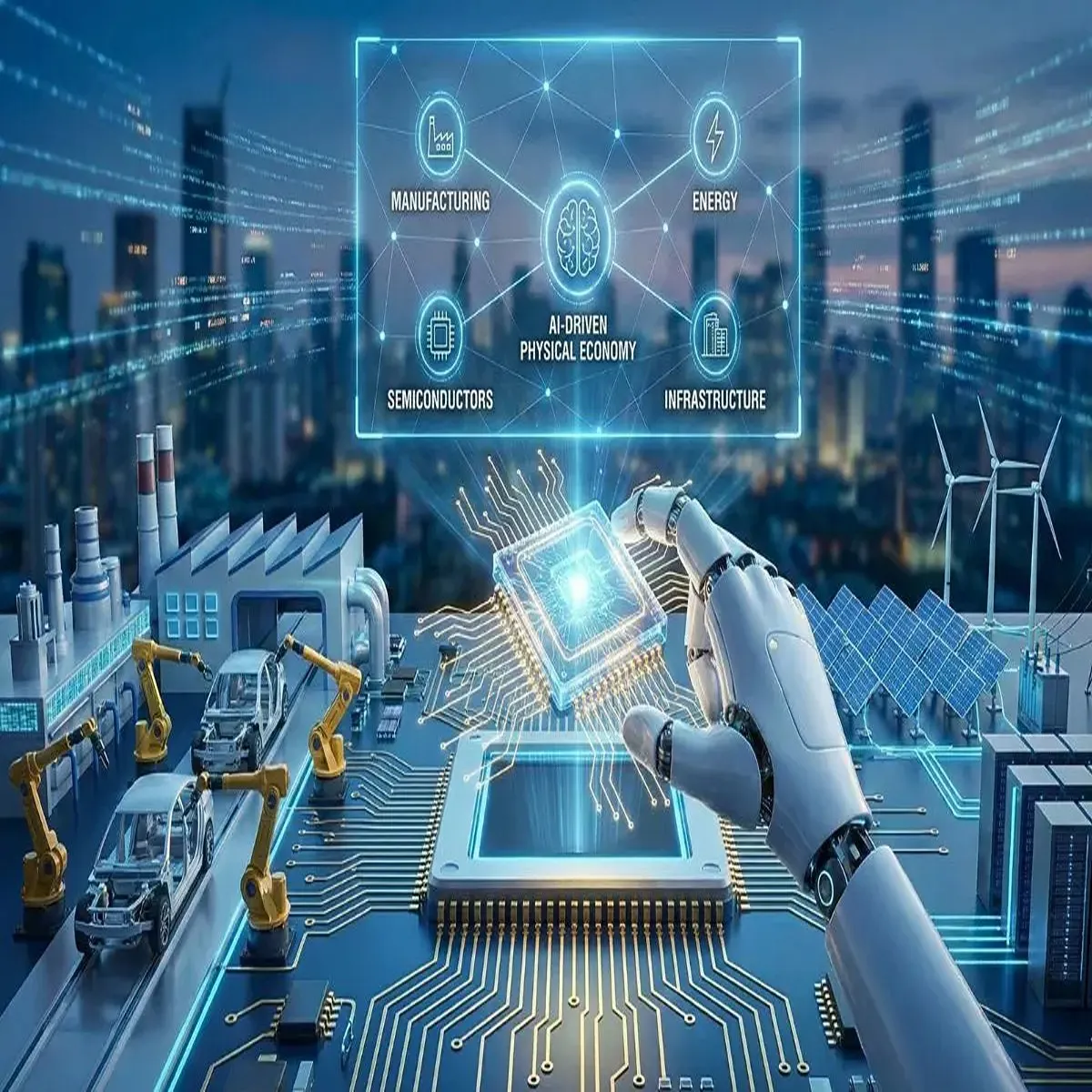
On the hardware front, the “Chip Wars” have entered a sophisticated new phase. The recent partnership between NVIDIA and TSMC to develop silicon photonics-based chips has sent shockwaves through the Nasdaq. By using light instead of electricity to move data between chips, these prototypes are shattering the physical limits of traditional semiconductors.
For the US tech market, this means data centers can now handle the massive compute requirements of 8K video generation and real-time 3D “Beam” calls without the astronomical energy costs that plagued the industry last year. Investors are keeping a close eye on these “optical interconnects,” as they represent the backbone of the next-generation internet.
Quantum Computing: From the Lab to the US Enterprise
While many viewed quantum computing as a distant dream, December 2025 has proven otherwise. Startups like Quantinuum and giants like Microsoft have successfully demonstrated “logical qubits” with error rates low enough for commercial use.
Major US financial institutions, including JPMorgan Chase, are already utilizing these systems for real-time risk assessment and portfolio optimization. The emergence of Diamond-based quantum systems—which can operate at room temperature—is particularly exciting for the American “Edge Computing” market. We are no longer looking at massive, frozen mainframes; we are looking at a future where quantum power could eventually sit in a local data hub near your neighborhood.
The “Spatial” Shift: Beyond the Vision Pro
The wearable market in the USA is no longer just about smartwatches. Following the success of the Apple Vision Pro, a new wave of “Smart Glasses” from Meta, XREAL, and Rokid is hitting the shelves this holiday season. These devices are leveraging Spatial Computing to blend digital interfaces with the physical world seamlessly.
In US manufacturing plants, workers are using these glasses for “Digital Twin” maintenance, seeing virtual overlays of engine parts that need repair. For the average consumer, it’s about navigation and real-time translation—essentially an “HUD” (Heads-Up Display) for daily life.
Cybersecurity in the Age of “Code Red”
As technology advances, so do the threats. The US Department of Homeland Security has recently flagged 2025 as the year of “Hyper-Advanced Phishing.” With AI models capable of cloning voices and faces with 99% accuracy, the American cybersecurity market is pivoting toward Zero-Trust Architectures and AI-driven fraud detection.
The recent “React2Shell” vulnerability and the record-breaking number of CVEs (Common Vulnerabilities and Exposures) patched by Microsoft this year highlight a grim reality: the digital frontier is more volatile than ever. For businesses, “AI TRiSM” (Trust, Risk, and Security Management) has become the most important acronym of the decade.
Key Takeaways for the 2026 Outlook
Infrastructure Reckoning: Companies are shifting from “Cloud-First” to “Strategic Hybrid” to manage AI costs.
Physical AI: Robotics is no longer just for warehouses; humanoid robots are entering the hospitality and healthcare sectors.
Sustainability: “Carbon-Aware Computing” is becoming a legal requirement for US-based data centers.
As we look toward the New Year, the message for the US market is clear: Innovation is no longer a luxury—it is the only way to remain competitive in an increasingly automated world.