
Tech Horizon 2026: The Global Shift from Digital Tools to Autonomous Agents
Tech Horizon 2026: The global technology landscape in early 2026 has officially moved past the era of “experimentation” and entered the age of “integration.” As we navigate the first quarter of the year, the conversation has shifted from what AI might do to how autonomous agents are fundamentally restructuring global economies. From the semiconductor breakthroughs in East Asia to the sustainable data center revolutions in Europe and North America, 2026 is proving to be the year where technology becomes an active partner rather than just a passive utility. For consumers and enterprises alike, the “digital transformation” is no longer a goal—it is a live, breathing reality that is redefining the speed of business and the nature of daily human interaction.

The $1 Trillion Milestone: A New Era for Global Semiconductors
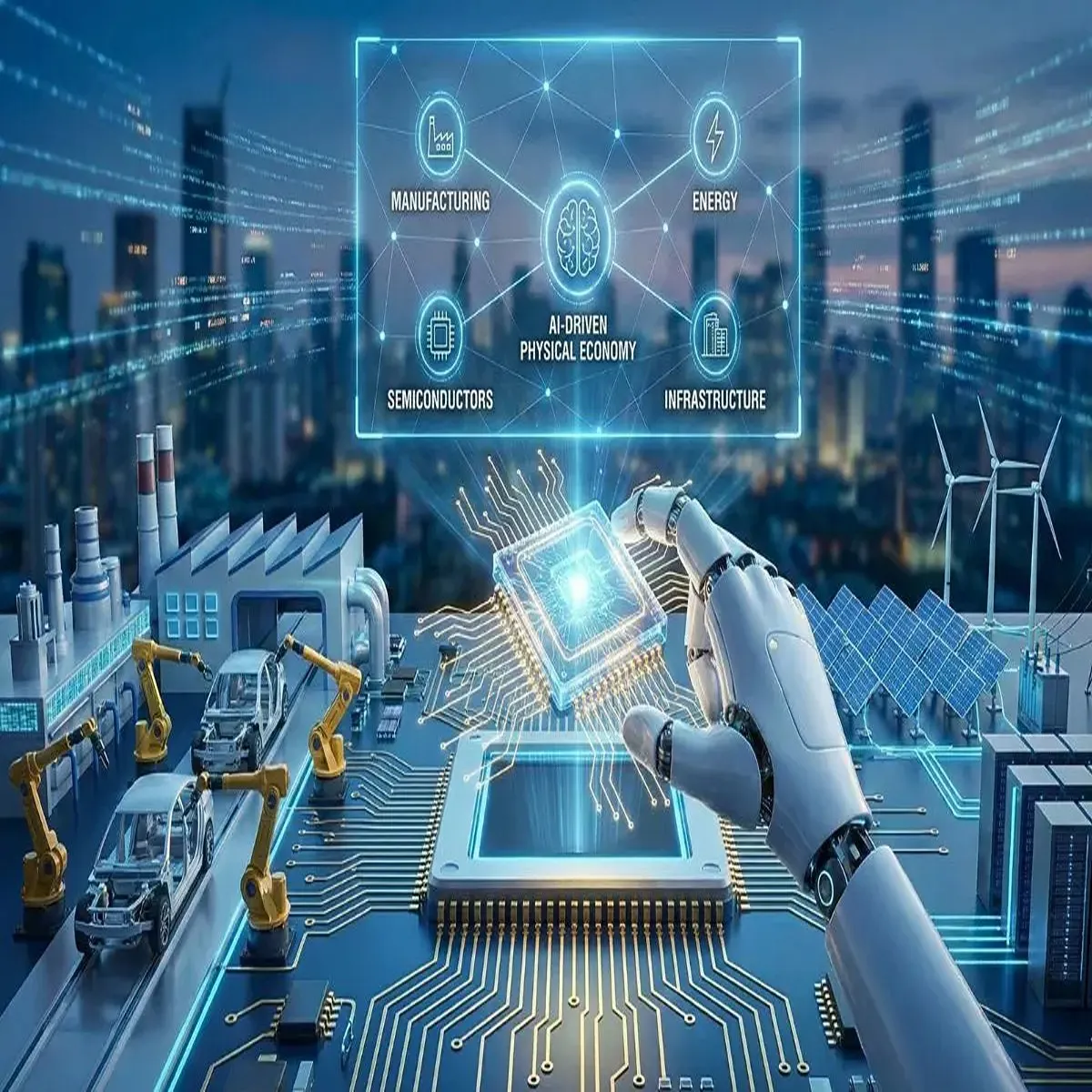
For the first time in history, the global semiconductor market is on track to exceed $1 trillion in annual revenue in 2026. This historic surge is not driven by traditional PC or smartphone sales, but by the insatiable global demand for Logic and Memory ICs required for high-scale AI inference.
Major hubs like Taiwan, South Korea, and the emerging “Silicon Desert” in the United States are seeing unprecedented capital reallocations. Unlike previous cycles, this growth is “AI-concentrated.” Without the contribution of AI-specific chipsets, the market would be growing at a modest 8%, but the explosion in data center infrastructure has pushed the year-over-year growth forecast to over 30%. This shift is forcing a global rethink of supply chain sovereignty as nations scramble to secure the silicon that now powers their national security and economic output.

The Rise of Agentic AI: From “Copilots” to “Outcome Owners”
If 2024 was the year of the chatbot, 2026 is undoubtedly the year of the AI Agent. The tech world has moved beyond simple conversational interfaces to “Agentic Reality.” Leading platforms from Google, Microsoft, and Salesforce have launched systems that don’t just suggest actions—they execute them.
In the global enterprise sector, these agents are now acting as “governed business operators.” They manage complex supply chains, negotiate procurement contracts, and handle customer service workflows autonomously. For the average consumer, this translates into “Zero-Click Commerce.” Through deep integrations—like the recent Walmart-Google partnership—AI agents can now predict household needs, find the best global prices, and manage deliveries without the user ever opening a traditional search engine or app.
Sustainable-by-Design: The Green Compute Revolution
As the power consumption of global data centers reaches levels comparable to medium-sized nations, 2026 has ushered in a “Sustainability Reckoning.” Tech giants are no longer just software providers; they have become the world’s most aggressive investors in renewable energy and modular nuclear technology.
Across Europe and North America, the concept of “Carbon-Budgeted AI” has taken hold. Organizations are now required to report the environmental impact of their AI models as part of standard ESG (Environmental, Social, and Governance) disclosures. This has led to the rise of “Small Language Models” (SLMs) and edge computing, where AI tasks are processed locally on devices like the new Snapdragon-powered laptops and AI-ready iPhones, drastically reducing the energy load on global cloud infrastructures.
The “Agentic” Car: Automotive Tech Beyond the Screen
The automotive industry is seeing a total reimagining of the “In-Cabin” experience. At recent global tech showcases, the focus has shifted to Conversational Cockpits. Using MedGemma-level auditory intelligence, vehicles in 2026 can now detect passenger health metrics, manage stress through adaptive environmental controls, and provide real-time, proactive maintenance advice.
Self-driving technology has also matured into localized “Valet Systems.” In major global cities, autonomous vehicles are now capable of navigating complex parking structures and urban delivery zones with zero human intervention. This isn’t just about luxury; it’s a logistical overhaul that is reducing urban congestion and changing the way global logistics companies approach the “last-mile” delivery problem.
Digital Sovereignty and the New Web Economy
As AI-generated content becomes the standard, the global “Trust Economy” has become the most valuable currency. With Google’s AI Overviews dominating 2026 search queries, the traditional “Click-Through” model of the internet is being replaced by a “Brand Mention” economy.
For digital publishers and global brands, the goal is no longer just to rank on page one, but to be the “Cited Source” for AI agents. This shift is driving a massive investment in high-quality, verified human journalism and specialized niche content. Digital sovereignty has become a key theme for 2026, as countries implement stricter data residency laws to ensure that the “intelligence” generated by their citizens’ data remains within national borders.
Final Thoughts: Navigating the Autonomous Future
The year 2026 is a tipping point. We are witnessing the birth of a world where technology is proactive rather than reactive. As the global semiconductor market nears its trillion-dollar peak and AI agents take over the heavy lifting of our digital lives, the human role is being elevated to one of “Orchestrator.” The challenge for the remainder of 2026 will be ensuring that this rapid transition remains inclusive, sustainable, and, above all, human-centric.