
India Tech Revolution 2025: From Made-in-India Chips to the Dawn of 6G — Here is What’s Changing
India Tech Revolution 2025: The Indian technology landscape is undergoing a monumental shift as we head into the final week of 2025. What was once a market primarily driven by software services has now transformed into a global hardware and AI powerhouse. From the buzzing corridors of Bengaluru to the high-tech labs in Noida, India is no longer just “using” technology; it is “defining” it. With the recent commencement of commercial production at ten new semiconductor units and the successful trial of the indigenous DHRUV64 microprocessor, India has officially entered the elite league of chip-manufacturing nations. This isn’t just a trend; it’s a digital renaissance that is reshaping the economy and the daily lives of over a billion people.

The Semiconductor Milestone: ‘Made in India’ Chips are Now a Reality
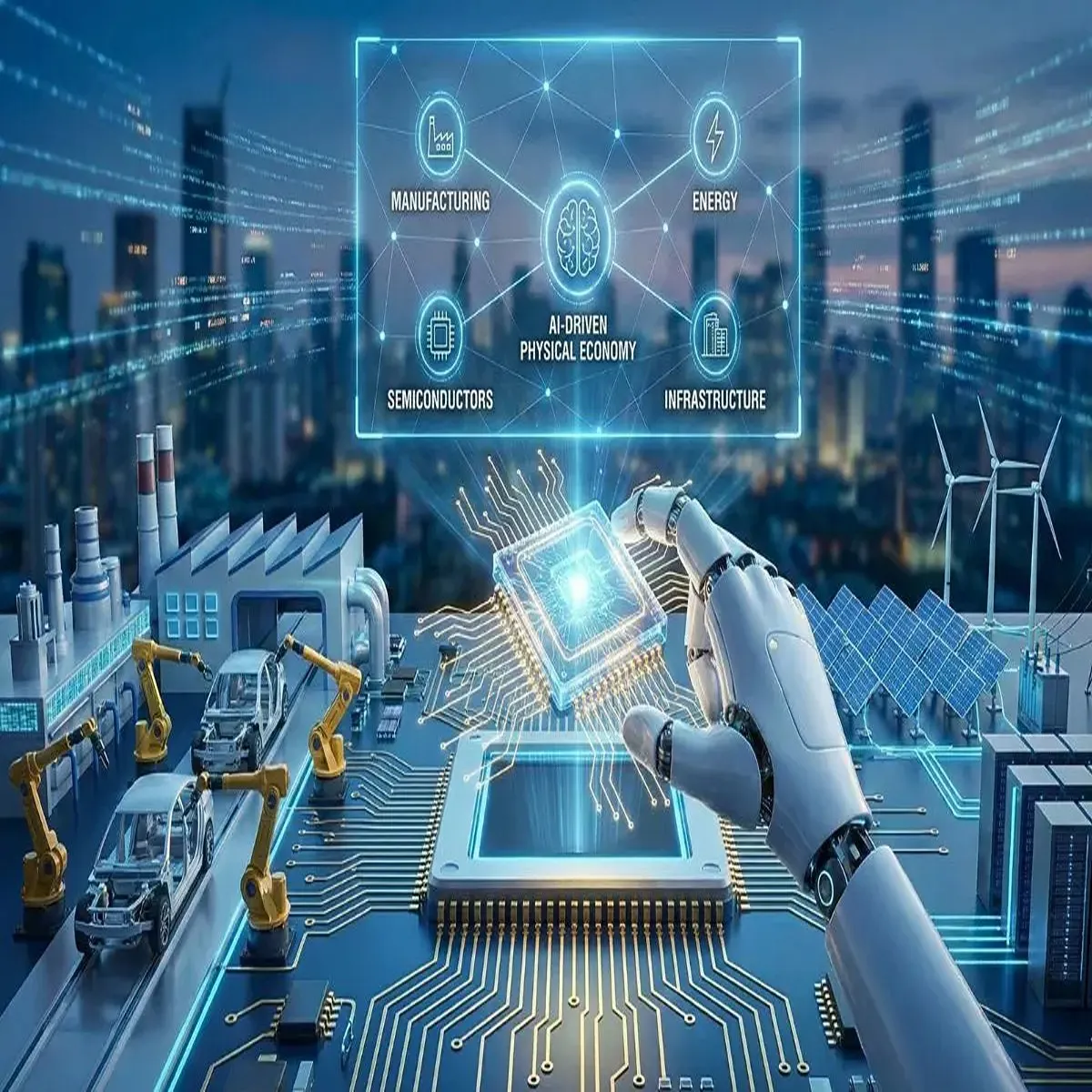
The dream of a self-reliant India in the electronics sector has taken a giant leap forward this December. The Ministry of Electronics and Information Technology (MeitY) recently confirmed that all ten approved semiconductor manufacturing units have started commercial production. This move is expected to drastically reduce India’s dependency on imports from Taiwan and China. The “DHRUV64,” India’s first homegrown 1.0 GHz 64-bit dual-core microprocessor, is set to power everything from defense systems to smart city infrastructure. For the Indian consumer, this means more affordable smartphones, tablets, and IoT devices in the coming months as local sourcing becomes the norm.
Smartphone Market War: Apple Leads Value Share While 5G Becomes Universal
The Indian smartphone market has seen a dramatic reorganization in late 2025. According to recent market data, Apple has secured a staggering 30% value share in the Indian market, driven by the massive success of the iPhone 17 series and its aggressive ‘Make in India’ expansion. While brands like Vivo and Samsung lead in volume, the shift toward “premiumization” is evident. 5G adoption has reached a saturation point, with 5G-enabled devices now available for as low as ₹7,000, making high-speed connectivity accessible to the rural masses.

The Rise of Generative AI: Beyond Chatbots to Real-World Impact
2025 has been the year where Artificial Intelligence (AI) moved from being a gimmick to a necessity in India. The recent “A(I)NDIA Conclave-2025” highlighted how Indian startups are using Generative AI to solve local problems—from AI-driven crop advisory for farmers to real-time voice translation in 22 official Indian languages. Major IT giants like TCS and HCLTech have pivoted their entire service models to “AI-first,” integrating specialized AI agents into banking and healthcare sectors. However, the focus remains on “Responsible AI,” ensuring that the workforce is upskilled rather than replaced.
5G Saturation and the First Glimpse of the 6G Era
India has officially become one of the fastest countries to roll out 5G, with over 99% of districts now covered. But the conversation has already shifted to the “Bharat 6G Alliance.” With the Department of Telecommunications (DoT) announcing successful 6G testbed trials in late 2025, India is aiming to be a global leader in patenting 6G technologies. The goal is simple: near-zero latency and speeds that are 1,000 times faster than 5G. This infrastructure is set to revolutionize remote surgery and autonomous driving, which are currently being tested in specialized “Tech Zones” across Bengaluru and Hyderabad.
EV Infrastructure: The Wireless Charging Revolution
The Indian Electric Vehicle (EV) market is no longer just about scooters. In a breakthrough development this month, an indigenous wireless EV charger capable of charging a vehicle to 90% in just 3 hours was unveiled. This technology, developed through a public-private partnership, aims to eliminate “range anxiety” by integrating charging pads into parking spots and public roads. As the government prepares to launch the “National Broadband Mission 2.0,” the synergy between 5G-enabled smart grids and EV charging stations is making India’s green energy goals look more achievable than ever.
Cybersecurity in the Age of Deepfakes: New Challenges
With great technology comes great responsibility. As India crosses the milestone of 1 billion internet users in 2025, cybersecurity has become a top priority. The “GhostPairing” malware and sophisticated AI-generated deepfakes have prompted the government to introduce stricter digital laws. New AI-based verification tools are now being integrated into WhatsApp and other banking apps in India to protect users from financial fraud. For the average user, the message is clear: digital literacy is the best defense against evolving cyber threats.
Conclusion: A Future Built on Innovation
As we look at the trajectory of 2025, it is clear that India has moved past its identity as a “back-office” for the world. The convergence of local hardware manufacturing, ubiquitous 5G, and indigenous AI solutions has created an ecosystem where innovation is happening at a grassroots level. For tech enthusiasts and the general public alike, the coming year promises even more integration of technology into the fabric of Indian society, making the “Viksit Bharat 2047” vision feel closer than ever.